
We all learn in different ways and that’s what makes us unique and interesting. Different learning styles is a concept that was present during Ancient Greek times, with Aristotle being at the forefront.
It wasn’t until the 1960’s that learning style theories were developed and academics started to research how these could be used in educational settings. A 2017 research paper from the Swansea University Medical School found that 90% of academics agreed there are “basic conceptual flaws” with learning styles theory, yet 58% agreed that students “learn better when they receive information in their preferred learning style”.
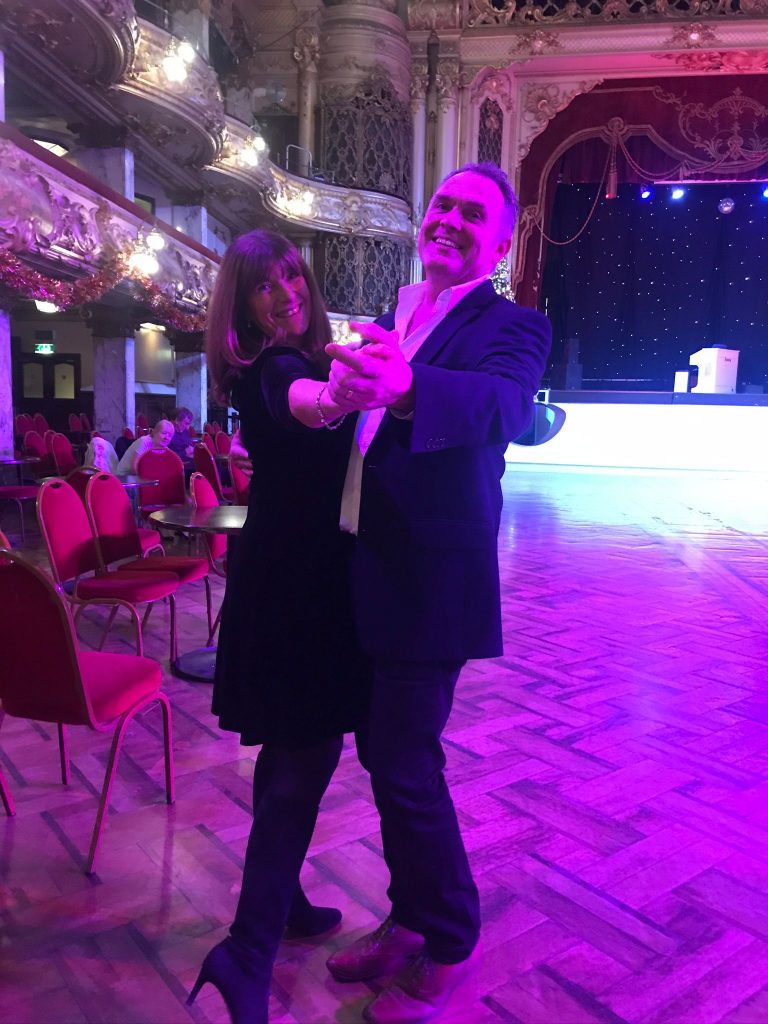
Two years ago, without any previous experience or knowledge other than watching ‘Strictly Come Dancing’, my wife and I decided to learn how to dance Ballroom and Latin. This was an important step (excuse the pun) for me and made me reflect on our different learning styles in action. I preferred to watch first, then try a few steps, watch again and then practice those steps I had committed to memory. When I forgot the steps, I would freeze like my feet were stuck to the dancefloor. My wife would be trying to lead me, not the done thing in dancing I know! She was more than happy to carry on and give it a try. We had never learnt together in our 35 years together and our difference in learning styles was very apparent.
Tip: Discover your Learning Style. Go online, find a Learning Styles Questionnaire and complete it. The result may confirm what you already know and will help you work out the best tools to use and how to get the best out of the learning situation – online, face to face, reading, etc.
Having learned many dance steps and routines now I have realised that my adult brain thinks that it has reached a point where it can’t hold any more Waltz moves or Cha Cha steps. But it can. I have found that I seem to forget everything new when I get back home after a short car journey but then something magical happens overnight!
You will probably have heard the expression – ‘let me sleep on it’. When we sleep our brain’s work like a computer, consolidating and compartmentalising our experiences into ‘files and folders’ ready for retrieval.
Tip: Get a good night’s sleep. Vary your sleep time depending on what you are learning. If you are trying to learn facts and figures, go to bed early and get the deep sleep of the early evening. Then get up early and review what you had been learning the day before. In my case the sleep that best consolidates creative thinking, motor skills and my new dance routines happens in the morning before awakening. So, to learn these skills you may find it best to go to bed a little later than normal and sleep in a bit.
Christmas before lockdown we held a bit of a party. Good food and good friends and plenty of socialising. Music turned up, we decided to have a dance around the sitting room! As a couple we danced some of our Cha Cha moves and our friends were excited to learn some of the steps. Apart from having great fun I found that my own learning was further embedded.
Tip: Share your learning with others. Why is this such an effective way to learn? Because when we learn with the intention to teach, we break the material down into simple, understandable chunks for ourselves. It also forces us to examine the topic more critically and thoroughly, helping us to understand it better. Heads up to my team – watch out 😊
When we first started to learn to dance, we argued. We argued about timing, stepping on each other’s toes, forgetting moves and so on. We would come home feeling anxious that we hadn’t danced well and the arguing would continue. We decided that we were never going to be top professionals (and never intended to) and the reason we were doing this was to have something that we enjoyed. It clicked.
Tip: Have fun. Having fun and being excited about learning increases brain-activity of neurons that use Oxytocin (pleasure hormone), Dopamine (reward, motivation, learning, senses, thinking hormone), and Norepinephrine (energizing, attention hormone) which improve learning and memory.
I am the type of learner who likes to question things to get a bigger picture and more perspective. I like to be curious and look at different ways and resorted to (and still do) the internet, especially YouTube, to see other dancers in action.
Tip: Be curious. Nothing stimulates learning quite like curiosity! Be childlike – keep asking why? You’ve probably heard children asking this before or may remember doing it yourself. Instead of letting a textbook or dance teacher in my case, guide your learning, you take the lead. Seek answers from many sources. Don’t merely memorise theories and techniques—question them at every step. Think about why they matter, why they’re relevant. Tinker and play around with them to see what you end up discovering! You may end up surprising even yourself.
We practice around 3-4 times a week. Practicing in different places like the garden or the driveway presents it’s own unique challenges too. We focus on the difficult steps and routines, the ones which stretch us both physically and mentally.
Tip: Practice. Practice in itself is great, but if you’re practicing things you know well, you’re doing it wrong. In order to excel at any skill, you need to push yourself out of your comfort zone and practice things you aren’t good at. This is known as deliberate practice and was popularised by Anders Ericsson. Ericsson and his team studied expert athletes, violinists, and memory champions and found that they spent a lot of time improving areas they were weak. Additionally, they consulted their teachers to find out where exactly they were lacking. Along with spending more time on your weaknesses, Ericsson also emphasises the importance of concentration while practicing. If you’re practicing while your mind is all over the place, you’re not getting much out of it. So, the next time you go to practice a new skill, step out of your comfort zone and challenge yourself. Concentrate on whatever is most difficult for you, and with time you’ll find you achieve a higher level of overall efficiency.
To recap the things that work well for us and can be applied to any learning:
- Discover your Learning Style
- Get a good night’s sleep.
- Share your learning with others
- Have fun
- Be curious
- Practice
And if you are ready to undertake some learning with Pro-Development, get in touch and we will look to develop an event or programme to help you get the most out of your learning.We all learn in different ways and that’s what makes us unique and interesting. Different learning styles is a concept that was present during Ancient Greek times, with Aristotle being at the forefront. It wasn’t until the 1960’s that learning style theories were developed and academics started to research how these could be used in educational settings. A 2017 research paper from the Swansea University Medical School found that 90% of academics agreed there are “basic conceptual flaws” with learning styles theory, yet 58% agreed that students “learn better when they receive information in their preferred learning style”.
Two years ago, without any previous experience or knowledge other than watching ‘Strictly Come Dancing’, my wife and I decided to learn how to dance Ballroom and Latin. This was an important step (excuse the pun) for me and made me reflect on our different learning styles in action. I preferred to watch first, then try a few steps, watch again and then practice those steps I had committed to memory. When I forgot the steps, I would freeze like my feet were stuck to the dancefloor. My wife would be trying to lead me, not the done thing in dancing I know! She was more than happy to carry on and give it a try. We had never learnt together in our 35 years together and our difference in learning styles was very apparent.
Tip: Discover your Learning Style. Go online, find a Learning Styles Questionnaire and complete it. The result may confirm what you already know and will help you work out the best tools to use and how to get the best out of the learning situation – online, face to face, reading, etc.
Having learned many dance steps and routines now I have realised that my adult brain thinks that it has reached a point where it can’t hold any more Waltz moves or Cha Cha steps. But it can. I have found that I seem to forget everything new when I get back home after a short car journey but then something magical happens overnight!
You will probably have heard the expression – ‘let me sleep on it’. When we sleep our brain’s work like a computer, consolidating and compartmentalising our experiences into ‘files and folders’ ready for retrieval.
Tip: Get a good night’s sleep. Vary your sleep time depending on what you are learning. If you are trying to learn facts and figures, go to bed early and get the deep sleep of the early evening. Then get up early and review what you had been learning the day before. In my case the sleep that best consolidates creative thinking, motor skills and my new dance routines happens in the morning before awakening. So, to learn these skills you may find it best to go to bed a little later than normal and sleep in a bit.
Christmas before lockdown we held a bit of a party. Good food and good friends and plenty of socialising. Music turned up, we decided to have a dance around the sitting room! As a couple we danced some of our Cha Cha moves and our friends were excited to learn some of the steps. Apart from having great fun I found that my own learning was further embedded.
Tip: Share your learning with others. Why is this such an effective way to learn? Because when we learn with the intention to teach, we break the material down into simple, understandable chunks for ourselves. It also forces us to examine the topic more critically and thoroughly, helping us to understand it better. Heads up to my team – watch out 😊
When we first started to learn to dance, we argued. We argued about timing, stepping on each other’s toes, forgetting moves and so on. We would come home feeling anxious that we hadn’t danced well and the arguing would continue. We decided that we were never going to be top professionals (and never intended to) and the reason we were doing this was to have something that we enjoyed. It clicked.
Tip: Have fun. Having fun and being excited about learning increases brain-activity of neurons that use Oxytocin (pleasure hormone), Dopamine (reward, motivation, learning, senses, thinking hormone), and Norepinephrine (energizing, attention hormone) which improve learning and memory.
I am the type of learner who likes to question things to get a bigger picture and more perspective. I like to be curious and look at different ways and resorted to (and still do) the internet, especially YouTube, to see other dancers in action.
Tip: Be curious. Nothing stimulates learning quite like curiosity! Be childlike – keep asking why? You’ve probably heard children asking this before or may remember doing it yourself. Instead of letting a textbook or dance teacher in my case, guide your learning, you take the lead. Seek answers from many sources. Don’t merely memorise theories and techniques—question them at every step. Think about why they matter, why they’re relevant. Tinker and play around with them to see what you end up discovering! You may end up surprising even yourself.
We practice around 3-4 times a week. Practicing in different places like the garden or the driveway presents it’s own unique challenges too. We focus on the difficult steps and routines, the ones which stretch us both physically and mentally.
Tip: Practice. Practice in itself is great, but if you’re practicing things you know well, you’re doing it wrong. In order to excel at any skill, you need to push yourself out of your comfort zone and practice things you aren’t good at. This is known as deliberate practice and was popularised by Anders Ericsson. Ericsson and his team studied expert athletes, violinists, and memory champions and found that they spent a lot of time improving areas they were weak. Additionally, they consulted their teachers to find out where exactly they were lacking. Along with spending more time on your weaknesses, Ericsson also emphasises the importance of concentration while practicing. If you’re practicing while your mind is all over the place, you’re not getting much out of it. So, the next time you go to practice a new skill, step out of your comfort zone and challenge yourself. Concentrate on whatever is most difficult for you, and with time you’ll find you achieve a higher level of overall efficiency.
To recap the things that work well for us and can be applied to any learning:
- Discover your Learning Style
- Get a good night’s sleep.
- Share your learning with others
- Have fun
- Be curious
- Practice
And if you are ready to undertake some learning with Pro-Development, get in touch and we will look to develop an event or programme to help you get the most out of your learning.
Written by: admin
Published: 22 October 2021
Blog Articles
Why DiSC Team Days Are a Game-Changer for Connection and Performance
Why every leader should take their team into the countryside for more than just fresh air
Employee wellbeing: Why it matters more than ever in businesses today
Burnout in your team is costing your business more than you think
Dare to go there! What really happens in coaching and why it works
“I haven’t got time for this” – why taking time for coaching matters
How much can you really learn in a day?
The power of quick wins in professional development
Why consultancy matters: The catalyst for clarity, growth and smarter decisions
An extremely well facilitated day which contained a significant amount of appropriate content.
Really helped the team focus in on our key challenges and issues providing thinking and learning.
Well timed and important due to ongoing changes and developments in our journey.
Th... more
Leadership Development Day Attendees
You may also like...